

Dancing with the Father Complex
and Finding Feminine wisdom

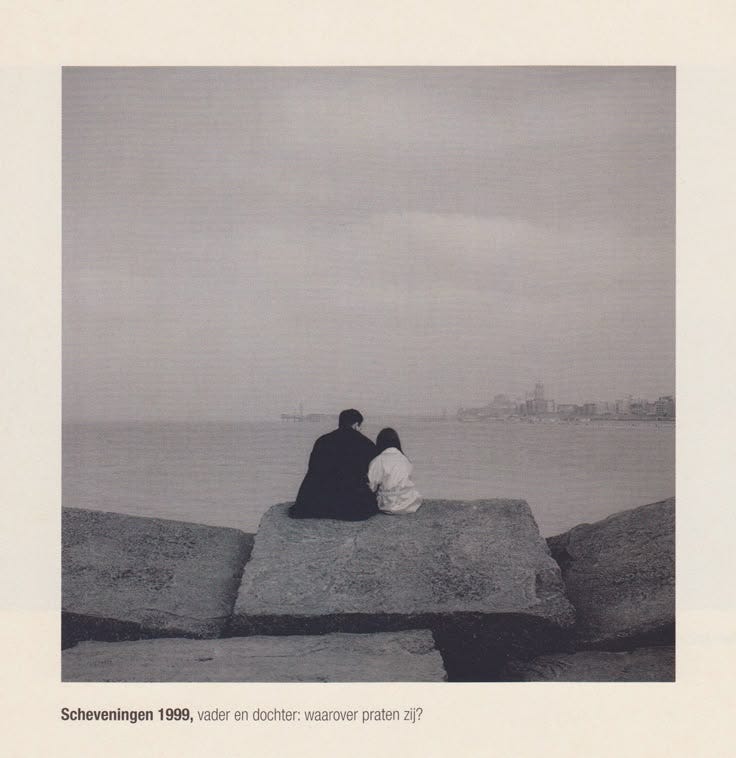
About a year ago, I began to have dreams about my father. A few were disturbing to the point that I knew Psyche wanted me to sit up and pay attention. And there was the one in which my mentor from beyond the grave, Marion Woodman, gave it to me straight: “You think this is about your mother, Blaire, but really it’s about your father,” she said bluntly in the dream space.
Hard to argue with that, Marion.
She (or should I say Psyche) was right, of course. For 15 years, I’d been courting the Goddess—ritual dance, ceremony, bodywork, embodiment, p*ssy work, deepening into the musculature of my own body, relearning the language of sensation, holding space for my emotions. Where I once felt adrift and alone in the confines of my body, I was able to create a home within myself.
The great gift of motherhood was realizing that, as an adult and now a mother, it’s no one’s job to mother me. It’s mine. It brought me face to face with old grief and the great gift that I can mother myself better than anyone else.
But the pendulum had swung so far to one side—probably because it needed to. There was an urgency and a rightness in addressing my Mother complex—lifelong work, to be sure—but every archetypal energy has a positive and a negative pole, and I began to feel the heavy inertia of the Mother seducing me back into the underworld long after it was time to resurface.
So much time working on the inner Feminine welcomed in the negative Mother who wanted me tucked in her bosom, catatonic as she rocked me back and forth. I became depressed. I felt stuck in all directions, like I was under a wet, weighted blanket. I had dreams of two battling parts: one screaming, Don’t go back to sleep! while the other embraced the soft, warm, undifferentiated arms of Mother.
I intuited—my dreams guiding me—that it was time to turn my attention to Father so that the Masculine could rise to meet the Feminine in the double helix of my psyche.
Part of wrestling with my Father complex was acknowledging that the writer’s block, the creative impasse, the inability to surrender to my own life force, was in fact in service to my psyche. It wasn’t random. It wasn’t punishment. It was Psyche putting down its foot and ushering in a new way—a third way—provided I could withstand the inner tension.
My psyche was, and continues to be, saying no to a Father complex that demands perfection and obedience to values that have very little to do with who I actually am. It says no to the inflation of outer authority, unrealistic ideals, and soulless action.
I spent years building and running a six-figure somatic education business that left little room for my own humanity or my Feminine soul.
I felt desperately lost in the projections and expectations of others, betraying myself over and over again. My inner Masculine felt extractive, impossible to please, a slave driver demanding a level of performance and productivity that was unattainable and cruel.
I tried to put the blame for these behaviors onto others. He is exacting and unforgiving! She is unreasonable and unfair! But in the end, it became clear my own inner patriarch was driving me to please, to achieve, to appear perfect to the outer world.
“So unconscious is the driving voice of these complexes that our bodies may have to break down before we recognize that we are slaves to an inner dictator.”1
I believe the Feminine psyche is particularly vulnerable to inflated patriarchal ideals. When we don’t have footing in our own virgin territory—a felt sense of who we are and what we stand for—we can get so easily swept up in the fervent pursuit of success. Our sense of worth can become so intertwined with our achievements, our looks, our body weight, the letters behind our name, that we never know who or what we are truly made of. And in this pursuit, we contort and control, we damn ourselves for every imperfection, and the Feminine soul whittles away in the face of patriarchal values full of nothing but hot air.
And in this pursuit, it’s women who become their own abusers—the biggest patriarchs of all.2
My own father was not a particularly “patriarchal” man in the sense that he was not a slave driver. He worked to live, not the other way around. But he was a patriarch in the sense that he wanted to protect the women under his wing, even if that meant leaving us infantilized or depotentiated, blind to our own power.
I loved my father. He was often the only loving presence in a sea of chaos, but far from emotionally available.
I idealized him, which is what Father’s Daughters do.
For reasons real or imagined, as Father’s Daughters we lift our fathers up to great heights, and if they are not self-aware enough to reject our projection onto them, they will unconsciously accept it—trapping us in a psychic space where not only are their personal ideals God, but so is the collective Father and everything it represents: institutions, authority, success, striving, accomplishment, etc.
The collective Father then stands inflated, casting a long shadow over true Feminine values, where independence trumps interrelatedness, logic is more valid than the feeling function, and the mind is more legitimate than the body.
Even after all my years in the Feminine space, breathing life back into my body, I could feel the tendrils of a Father complex that said with a smirk, “Oh, cute. You’re doing your Feminine stuff again,” as if I were a little girl playing with dolls.
Dancing with the Father complex has been a journey of seeing the inflation and distortion of masculine values inside myself—where I berate and shame myself for imperfection, where I belittle the importance of the work I do in the world, where I meet the self-protecting, infantilizing voice of, You’re not really gonna say that, are you? Who cares what you think? There are people much more qualified to do this.
It’s the work of pulling back unconscious and destructive loyalty to my personal father and inviting in an inner Masculine rooted in Feminine protection—one that truly sees me, believes in me, and backs my Feminine strength.
¹ Woodman, M. (1993). Leaving my father’s house: A journey to conscious femininity (p. 77). Boston, MA: Shambhala.
Woodman, M. (1993). “You know as well as I do that women that are trapped in patriarchy could be worse patriarchs than men.” [Speech, 1993?]. Cited in Carl Jung Depth Psychology Site. Retrieved from https://carljungdepthpsychologysite.blog/
So deeply wise and the writing here really elicits so much feeling in me.